
Best Free VPNs for Online Privacy and streaming services
Explore our comprehensive blog post about free VPNs, including the best free VPN options and the top free VPNs available today. Learn how to protect your online privacy without spending a dime!
11/2/20255 min read
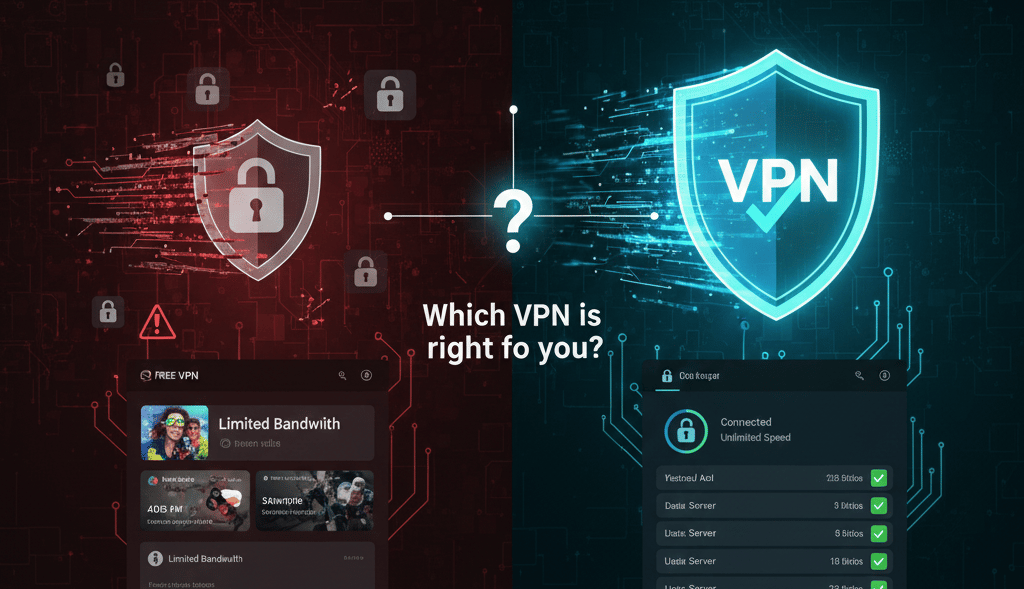
For years, the internet has been advertised as a place of freedom and a global, open environment where anyone can learn, share, and connect. But behind the scenes, that freedom has quietly eroded. ISPs (Internet Service Providers) track browsing habits, advertisers profile you, and governments request data logs more often than ever.
So it’s no surprise that VPNs. Once a niche privacy tool, they are now mainstream and essential. But not everyone wants to pay for a VPN. And that leads to one essential question:
Can free VPNs protect your privacy? Or are they too risky to trust?
In this deep-dive guide, we’ll examine what free VPNs truly offer, where they fall short, how they compare to paid options, and which free VPNs are actually saf. We’ll also explore how ISPs (Internet Service Providers) track you, why hiding your IP address matters, and why the “free internet” isn’t really free anymore.
If you’re considering a free VPN, this guide will help you make the right choice.
What your ISP knows about you? (and Why you should care)
Many people assume their internet provider is just a neutral gateway connecting them to the web. Unfortunately, the truth is far more invasive.
Internet Service Providers today can see:
Every website you visit
Every app you use
Every device connected to your home
Your approximate physical location
Your online habits and browsing times
Whether you’re streaming, torrenting, gaming, or videoconferencing
Under U.S. law, ISPs are not only allowed to track this behavior. They’re also allowed to sell it.
And globally? Things aren’t much better. Data retention laws in many countries require ISPs to store customer activity logs for months or even years.
In other words:
Your ISP knows you better than you think and shares more than you realize.
A VPN disrupts that by encrypting your connection and hiding your IP address. Which brings us to our next point…
👉 Do you know what your IPS (internet service provider) knows about you?
Your IP address is more than a series of numbers. It’s a digital fingerprint. With it, websites and trackers can determine:
Your city
Your ISP
Your browsing history
Your online identity
Your device information
Even your patterns of behavior
Advertisers build detailed profiles based on this. Governments can request data based on it. Hackers on public Wi-Fi can trace it.
A VPN masks your real IP and replaces it with one from its server network. The result?
Websites see the VPN server instead of you
Your ISP can no longer track your activity
Attackers can’t target your real network
This is the core reason VPNs exist: privacy through encryption and anonymity.
Free VPNs: the appeal (and the trap)
Free VPNs are popular for one simple reason: they cost nothing.
But like most things online, “free” always comes with strings attached…
Before we break down the risks, let’s acknowledge what free VPNs do provide because not all of them are bad
The benefits of free VPNs
1. They hide your IP address
Even basic VPNs mask your IP, giving you a layer of privacy and helping bypass simple restrictions.
2. They encrypt your traffic
Crucial for staying safe on public Wi-Fi in airports, hotels, and cafés.
3. They cost nothing
Perfect for casual users who don’t want a monthly bill.
4. They’re great for testing
Many people use free VPNs to evaluate an app before upgrading to premium.
The dark side of free VPNs (What you don’t see)
1. They sell your data
This is the number-one threat.
Your browsing history, device IDs, and online habits can be packaged and sold to advertisers — or worse, unknown third parties.
2. Many use weak or fake encryption
Some free VPNs don’t encrypt your traffic at all.
Others use outdated protocols vulnerable to interception.
3. Your bandwidth may be hijacked
One infamous free VPN (HolaVPN) was caught turning its users into a botnet-for-hire.
4. Ads, pop-ups, and tracking scripts
Free VPNs often inject invasive ads or trackers into your browsing session.
5. Limited speeds and data caps
Expect throttling, slow servers, and restricted bandwidth — making streaming or gaming nearly impossible.
6. No audit, no transparency, no trust
Paid VPNs undergo independent audits from firms like Deloitte, PwC, or KPMG.
Free VPNs? Rarely.
7. They may log your data… and hand it over
Some free VPNs store logs for:
Marketing
Legal requests
Data resale
Internal analytics
In short:
The majority of free VPNs are privacy risks — not privacy tools.
Related guides
Why hiding your IP address matter more than ever?
Here’s the uncomfortable truth:
Most free VPNs make money by exploiting your data. The very thing you’re trying to protect.
While premium VPNs earn revenue from subscriptions, free VPNs earn money from:
Advertising
Selling browsing data
Using tracking scripts
Limited-speed “upsell funnels”
Partnering with third-party analytics companies
In fact, multiple studies have found that a shocking percentage of free VPNs contain:
Malware
Browser hijackers
Hidden tracking tools
Weak, outdated encryption
No privacy policy at all
Let’s break down the biggest risks.
Major risks of free VPNs (Backed by research)
When a free VPN is good enough?
Despite the risks, there are situations where a trustworthy free VPN is perfectly fine:
Checking email or social media on public Wi-Fi
Accessing websites with mild geo-restrictions
Testing a VPN before paying
Basic online privacy for low-risk activities
Occasional travel or short-term use
If you fall into these categories, a free plan from a reputable provider might be more than enough.
When You should NEVER use a free VPN
If you need strong, reliable, high-performance privacy, do not rely on free VPNs.
Free VPNs are NOT ideal for:
Daily browsing
Streaming (Netflix, Disney+, BBC iPlayer)
Torrenting or P2P
Gaming
Online banking
Remote work cybersecurity
Protecting smart TVs or routers
Avoiding government censorship
Ensuring true anonymity
These situations require speed, security, and stability, all of which premium VPNs provide.
The best free VPNs (safe & legit options)
1. Proton VPN – The Best Truly Free VPN
Proton VPN is the only major free VPN with unlimited data.
No bandwidth cap, no speed throttling (on most servers), and no shady logging.
Pros:
Unlimited data
Strong encryption
Great privacy track record
Independent audits
Secure jurisdiction (Switzerland)
Cons:
Limited free server locations
Peak-time speeds can be slower
Perfect for: privacy, browsing, and occasional use.
2. TunnelBear – Easiest for Beginners
TunnelBear offers a fun, friendly interface with strong privacy protections.
Pros:
Very easy to use
Independent security audits
Good speeds
Cons:
Only 2GB/month
Limited advanced settings
Perfect for: casual, occasional VPN users.
3. Windscribe – Flexible & Feature-Rich
Windscribe offers up to 10GB/month with great privacy features.
Pros:
Generous free tier
Good speeds
Strong privacy focus
Cons:
Some features require paid upgrade
Apps are slightly more complex
Perfect for: users who need more monthly data.
Why premium VPNs are still worth paying for
Let’s be blunt:
If you care about streaming, speed, privacy, and unlimited protection, a premium VPN beats any free optio.
Paid VPNs offer:
No-logs policies backed by independent audits
Global high-speed networks
Unlimited bandwidth
Strong encryption and modern protocols (WireGuard, NordLynx)
Access to streaming services
Multi-device support
Automatic kill switches
No ads, no trackers
Top premium VPNs:
NordVPN – Fastest & most secure
Surfshark – Unlimited devices
PureVPN – Great for global coverage
Each offers a 30-day money-back guarantee.
Are free VPNs worth it?
Here’s the honest summary:
Yes — safe free VPNs exist
Proton VPN, TunnelBear, and Windscribe are excellent choices for light use.
But — most free VPNs are dangerous
Many log your data, sell it, inject ads, or use weak encryption.
Paid VPNs deliver real privacy
If you want speed, security, and unlimited access, premium VPNs are unbeatable.